
International Capacity Building on Accessibility Management for Theatre Operators
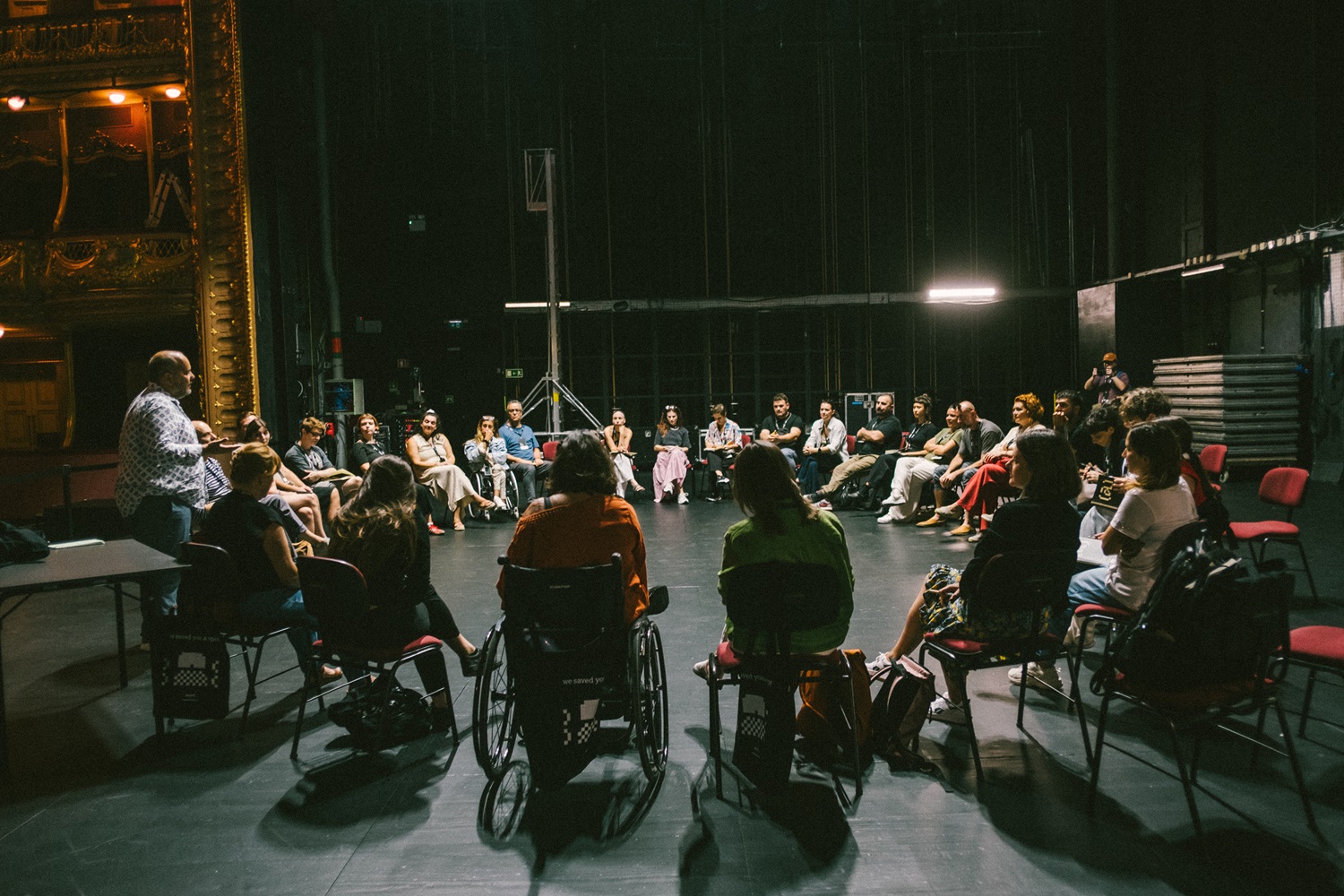
How do we create inclusive theatres, open and welcoming to all, promoting diversity, inclusion, and innovation in the performing arts?
In recent years, paradigmatic shifts have actively contributed to revise, re-think, re-shape practices. Inspired by universal design, new inclusive theatrical practices tackle three key issues: participation, representation, and fruition. Shifting from providing access for to creating access with, they empower people with disabilities, unleash creativity, and help develop small or large communities and new audiences. They call for awareness, empathy, equity and equality in theatre making and in the functioning of a venue. They also require trained experts, to avoid ableism and forms of tokenism, and successfully integrate different knowledge, experiences, and needs in the design, planning and implementation of inclusive theatrical practices.
The way forward seems to be an exciting journey into uncharted territory, and one we are ready to take!
Valeria Illuminati – Programme Scientific Coordinator
Full programme (February 23-26 at Teatro della Regina, Cattolica, Italy)
DAY 1 – UNIVERSAL DESIGN – SPACE AND WORD
09:45 – 10:45 | Welcoming and presentations
11:00 – 12:45 | Inclusive at every stage: Diversity, Lifespan, and Universal Design
Trainer: Giulia Bencini (University of Bologna, Italy)
14:30 – 16:00 | Making Space: Accessibility as a Relational Practice
Trainer: Fabio Fornasari (Tolomeo Museum of the Cavazza Institute for the Blind, Italy)
16:15 – 17:30 | Theatre Accessibility Assessment & Group Debrief
Trainers: Giulia Bencini (University of Bologna, Italy), Fabio Fornasari (Tolomeo Museum of the Cavazza Institute for the Blind, Italy)
DAY 2 – INCLUSIVE EVENTS: FROM PLANNING, BUDGETING AND FUNDRAISING TO EXECUTION AND IMPACT ASSESSMENT
09:45 – 12:45 | Accessibility, Inclusion, Participation: key issues in designing and implementing accessible events PT.1
Trainer: Elena Di Giovanni (University of Macerata, Italy)
14:30 – 16:00 | Budgeting, Fundraising and Economic Sustainability for Accessible Performing Arts
Trainers: Marco Luchetti (Bocconi University, Italy), Anna Consolati (Oriente Occidente Festival, Italy)
16:15 – 17:30 | Audience Feedback, Reception, and Impact Assessment
Trainer: Francesca Raffi, University of Macerata, Italy
DAY 3 – ACCESS SERVICES AND PRACTICES
09:45 – 10:45 | Focus on Technologies and Inclusive Practices
Trainer: FEDAPAS – Federación Extremeña de Deficientes Auditivos Padres y Amigos del Sordo, Spain
11:00 – 12:45 | Relaxed Performance: From Protocol to Cultural Practice
Trainer: Lorena Martínez Mier (Europe Beyond Access, Mexico/Sweden)
14:30 – 15:30 | Focus on Accessibility Services: Audiodescriptions
Trainer: Emmanouela Patiniotaki (ATLAS E.P., Greece)
15:30 – 16:15 | Focus on Accessibility Services: Surtitles and Sign Language
Trainers: Vera Jovanovic (PLAVO Theatre, Serbia), Emmanouela Patiniotaki (ATLAS E.P., Greece)
16:30 – 17:30 | Meet the trainers desk
DAY 4 – CASE STUDIES AND FOCUS GROUP
09:45 – 11:45 | Case studies: “European Approaches to Participation and Access”
Speakers: Anna Chiara Carlet (Lago Film Fest and AIKU Research Center – University of Venice, Italy), Iris Haist (Sommerblut Kulturfestival, Germany), Maria Vlachou (Acesso Cultura, Portugal), Pasquale Vita (ATER Fondazione, Italy) Emmanouela Patiniotaki (ATLAS E.P., Greece), Inga Laas (Disframe, Switzerland – online), Paolo De Lorenzi (Centro Diego Fabbri, Italy), Nicoletta Emanuele (Italian Union of the Blinds, Rimini Section – former, Italy)
Moderator: Ana Rita Osório, São Luiz Teatro Municipal (EGEAC), Portugal
12:00 – 12:30 | Focus Group introduction
14:30 – 15:30 | Focus Group PT.1
15:45 – 17:30 | Focus Group PT.2
DAY 5 – ADVOCACY AND POLICIES
09:30 – 09:45 | Institutional greetings
09:30 – 11:15 | Roundtable “Rethinking Access: Dialogue on Policy, Practice and Disability in the Performing Arts”
Speakers: Anna Consolati (Oriente Occidente Festival, Italy), Stojan Simic (PLAVO Theatre, Serbia), Vassilis Oikonomou (THEAMA, Greece), Cinzia Cazzoli (Emilia-Romagna Region, Italy)
Moderator: Giulia Allegrini (University of Bologna, Italy)
11:30 – 13:00 | Feedback Session and Participants’ Projects / Closing remarks
13:00 – 14:15 | Farewell lunch